What is Breast Reduction Surgery?
Breast reduction surgery, Reduction Mammoplasty, removes fat, glandular tissue, and excess skin from the breasts. It can also adjust the placement or reduce the size of the areolas, the darker skin surrounding the nipple.
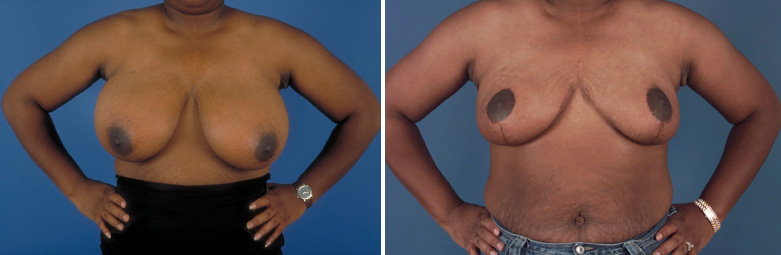
See patient above at 3 months post-surgery.
What does a Breast Reduction accomplish?
The goal of this cosmetic procedure is to give you a more harmonious balance of body proportions, giving you smaller, appropriately-shaped breasts. Reducing the breasts can significantly improve the quality of daily living, overall mobility, and alleviate associated medical problems such as back & neck pain, skin irritation, skeletal deformities of the chest wall & spine, and even breathing problems.
What happens during the consultation?
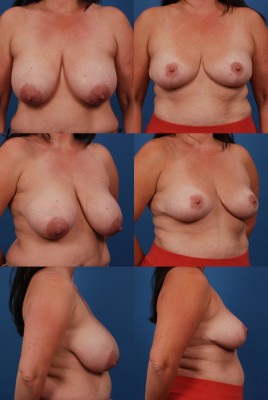 During the consultation, you will meet with Dr. Adams to discuss your surgical options in detail. He will address your concerns and your personal expectations for the outcome of the procedure. We will begin by taking professional photos that are used as a reference for thorough review and documentation. Your breasts will then undergo an examination for any areas of concern, in addition to a series of measurements. These measurements are necessary for your long-term health, proper surgical planning, and can be used for potential insurance approval. Following the breast exam, Dr. Adams will make recommendations and discuss the specifics of before and after care.
How is a breast reduction done?
There is a variety of procedural techniques for breast reduction surgery; the most common approach involves an upturned T-shaped incision surrounding the areola, extending downward, and then following the natural curvature of the crease under the breast. The surgeon will transfer the nipples into their new position. Skin from both sides will be extended downward around the areola, shaping the new contour of the breast. Liposuction may be used in addition, to remove excess fatty tissue from the armpit region.

In most cases, the nipples will remain attached to blood vessels and nerves during the procedure. However, if the breasts are abnormally large or pendulous, the nipples/areolas may require complete removal and are then grafted and placed into a higher position. This may result in temporary or permanent loss of sensation in the nipple and areolar tissue.
Dr. Adams will approach your breast reduction surgery in a manner that will not only achieve the optimal outcome for your anatomy, but is the most medically safe.
What can I expect after surgery?
With any cosmetic breast and body procedure, it is helpful to go into the process with a conscious understanding of your natural anatomy and appearance prior to surgery. Breast reductions are an innovative and life-changing procedure, but they are very different than a simple breast augmentation or mastopexy. While your results will enhance your body and may provide you with essential mental, physiological, overall health benefits, your outcome is unique to you and this type of surgery.
It is not uncommon for the breasts to begin to increase in size again post-surgery with weight fluctuations and hormones. Over time, the breasts may also lose volume and firmness due to inherent skin laxity or lifestyle choices.
There are many factors involved in your surgery plan and outcome; breast size prior to surgery, breast composition and shape prior to surgery, the framework of the existing cleavage folds and placement of areolas, weight, age, underlying medical issues, and even your reason for having surgery. It is important to remember where you started.
Is Reduction Mammoplasty covered by Insurance?
Whether you are wanting breast reduction surgery for enhancing your breast appearance, balancing or correcting your physique, or because of existing health conditions, this procedure is typically classified as an elective cosmetic surgery until proven medically necessary to your insurance provider. Dr. Adams is not contracted with a health insurance company and is considered out of network. If you feel that you are a candidate for breast reduction surgery and are seeking coverage, contact your insurance provider first to see what you qualify for or the criteria for qualification under your unique coverage plan. It may take months to qualify and will require delicate preparation and documentation. We are happy to help guide you through the process and obtain the information needed to ensure the most favorable care.
To learn more about Dr. Adams’ Breast Reduction Surgery in Dallas, contact us today!